


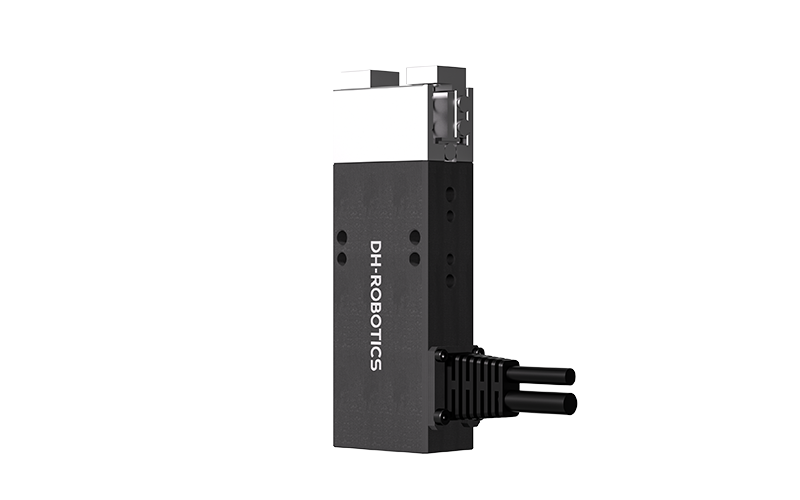


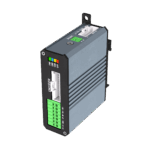
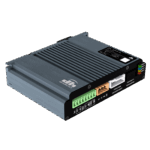



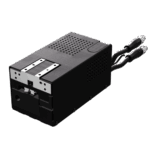
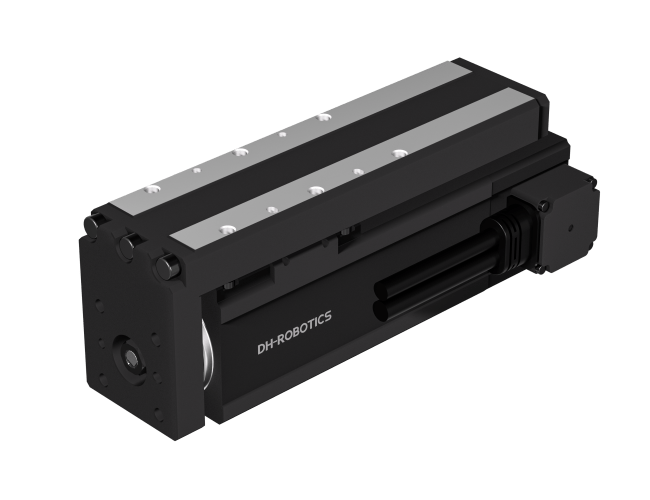
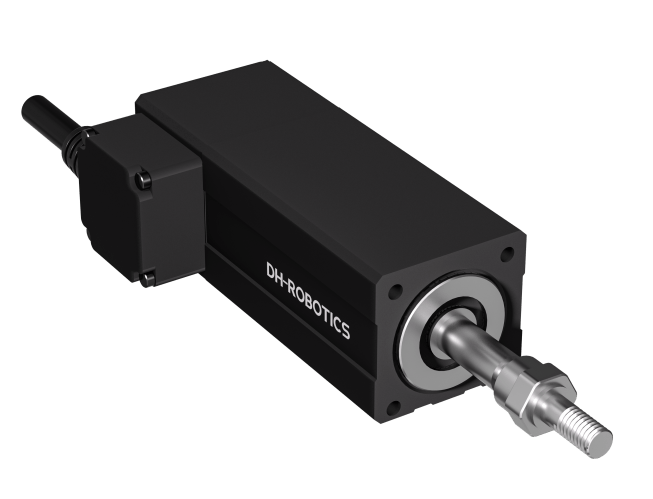
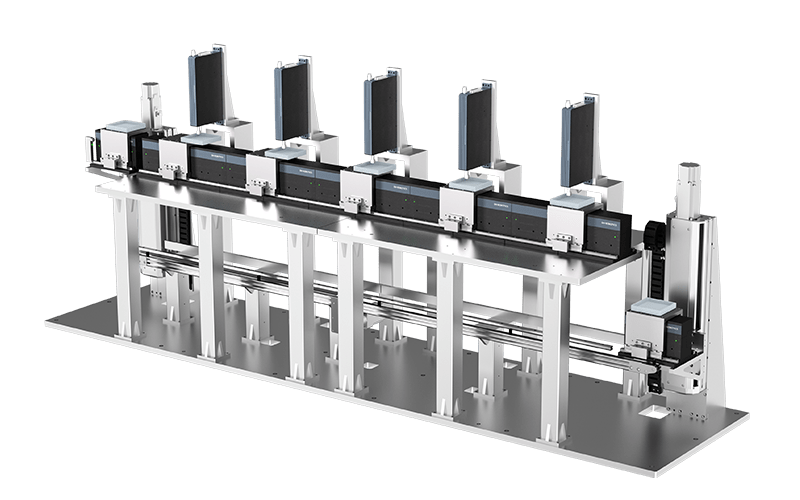
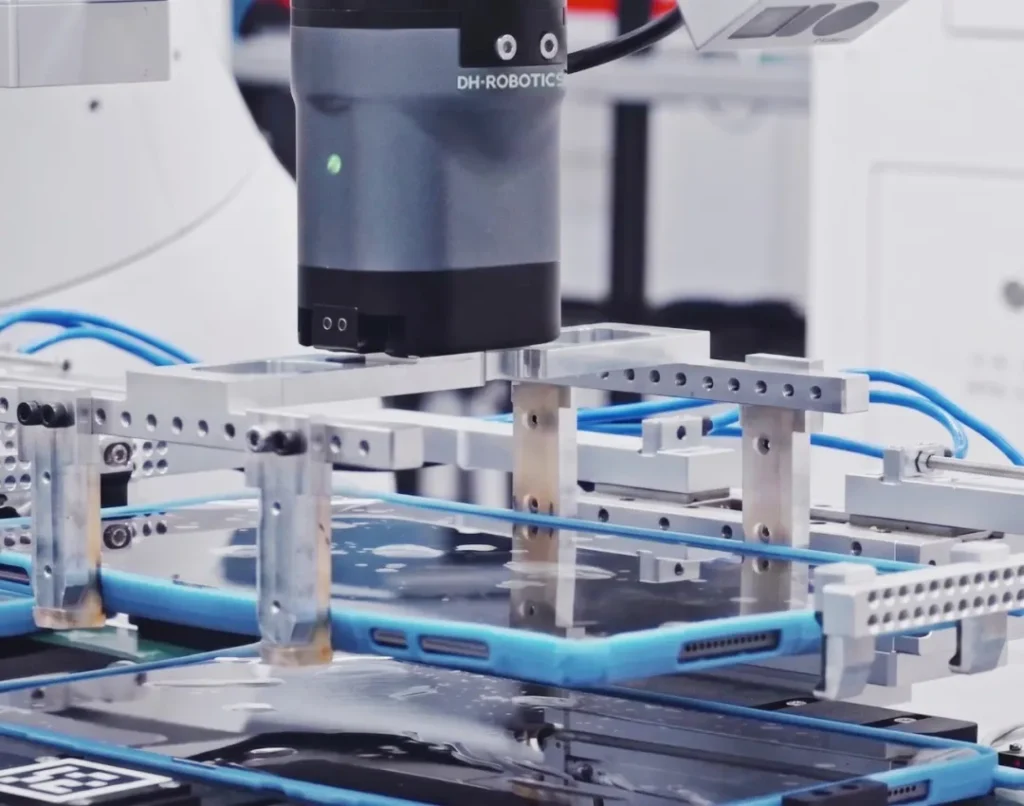
From June 23 to 28, AgiBot conducted a six-day validation on a mass-production tablet assembly line at Longcheer Technology’s manufacturing facility in Nanchang, Jiangxi, with the entire process broadcast live. During the validation, a fleet of AgiBot G2 wheeled humanoid robots equipped with DH-Robotics’ PGC Series Electric Grippers performed quality inspection tasks throughout the entire tablet production workflow, executing sustained, high-frequency operations while maintaining the pace of a live production line.
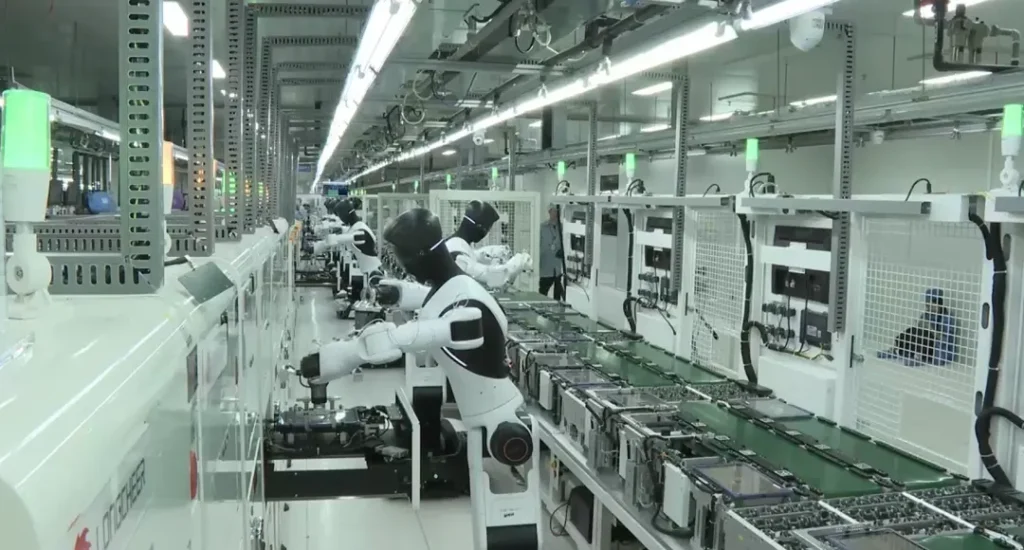
Over the course of the validation, the robots accumulated 64 hours of continuous operation while supporting the production of 17,625 tablets and completing 64,828 handling operations. The overall task success rate reached 99.99%, with positional deviation maintained within 2 mm while consistently meeting the line’s 22-second takt time. Operating in a real-world 3C electronics manufacturing environment, DH-Robotics’ electric grippers served as the critical end effectors responsible for continuous tablet loading and unloading, delivering the reliability required to keep the system operating consistently throughout the validation.
What Does a 99.99% Task Success Rate Really Mean?
The validation covered the complete quality inspection workflow for mass-produced tablets, including key processes such as MMIT (Multimedia Interface Test), AT (Audio Test), RSE (Radiated Spurious Emissions Test), and MT (Coupling Test).
Compared with the eight-hour, single-station validation conducted in April, this latest validation expanded from evaluating an individual workstation to validating the entire quality inspection workflow, marking the transition from proof of capability to end-to-end production validation.
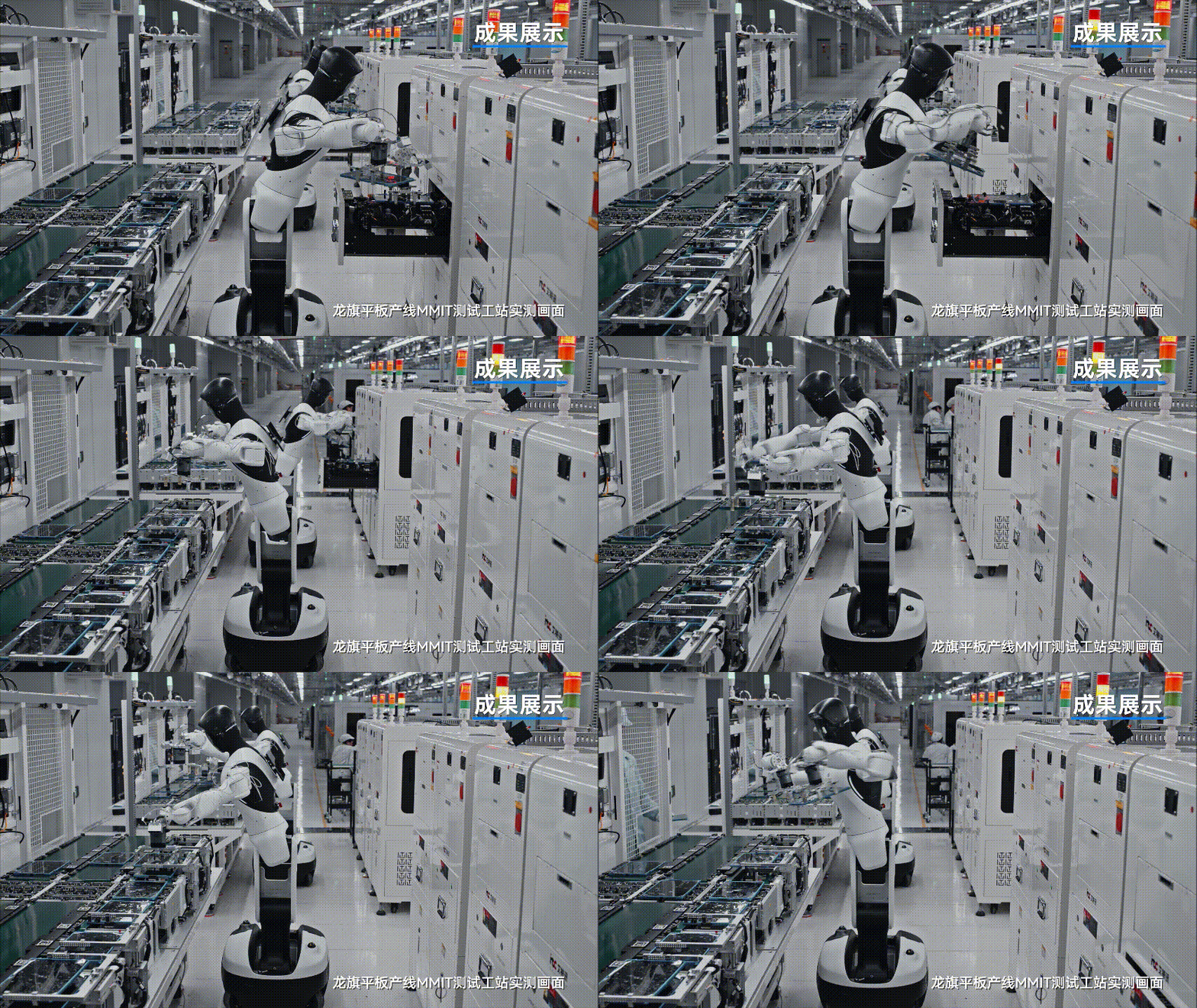
Throughout the workflow, every stage places stringent demands on loading and unloading cycle times, inspection consistency, and the efficiency of transfers between workstations. At the same time, the precision construction and wide range of tablet models require both highly accurate manipulation and the flexibility to accommodate different product configurations. Under prolonged continuous operation, even minor inconsistencies can disrupt production-line takt time and compromise inspection consistency.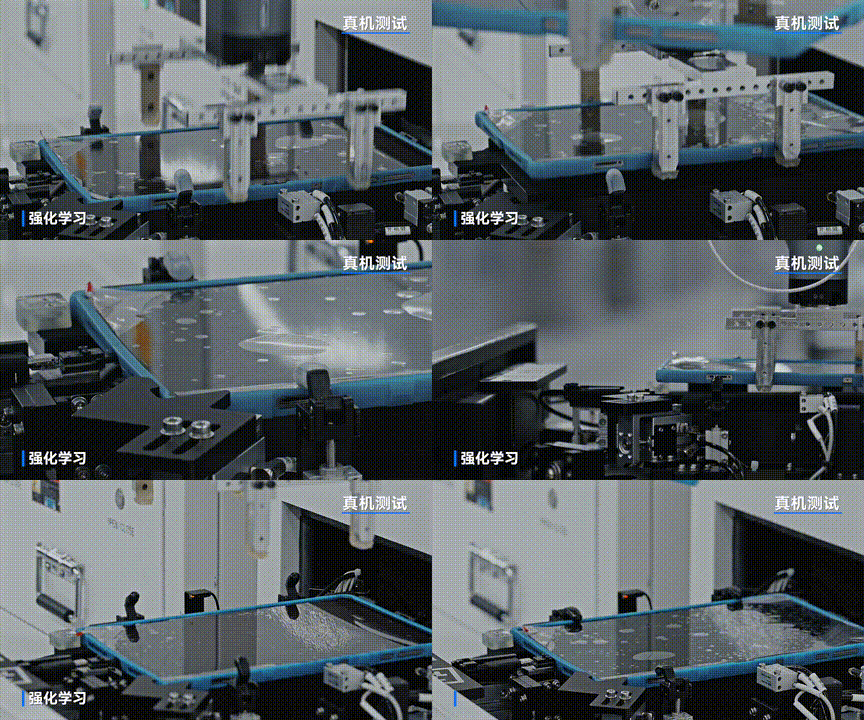
As a result, The challenge is no longer whether a robot can perform a task, but whether it can reliably execute an entire production workflow under real manufacturing conditions.
DH-Robotics Electric Grippers Enable Stable Production
In this context, end-effector performance not only determines overall system stability, but also directly influences how precisely and dexterously humanoid robots can operate in real manufacturing environments.
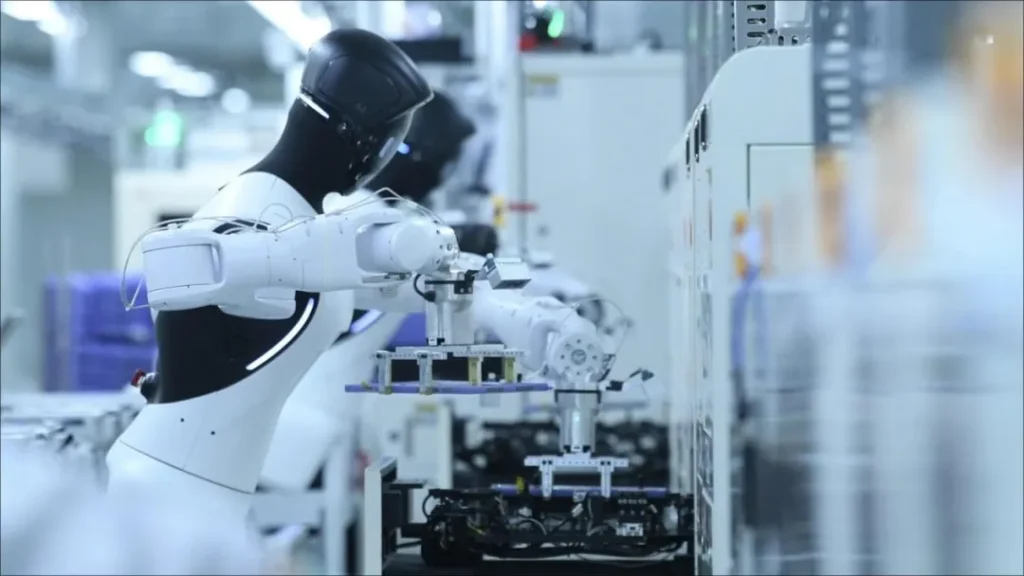
In practical production environments, the delicate construction of tablet devices demands exceptional gripping stability and precise motion control. At the same time, the need to handle multiple product variants requires end effectors to accommodate different gripping force, stroke, and payload requirements. During prolonged, high-frequency operation, even minor inconsistencies can escalate into production-line disruptions.
To address these challenges, DH-Robotics’ electric grippers delivered the reliability required for stable production.
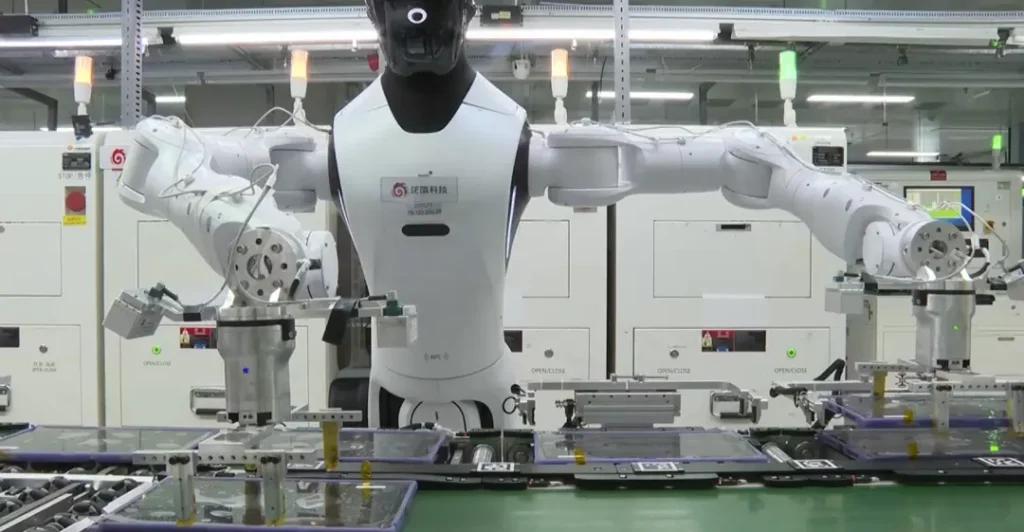
Leveraging high-precision force control, DH-Robotics’ electric grippers securely handle delicate workpieces while minimizing the risk of damage. Their mechanical design and control architecture also enable seamless adaptation to different product sizes and specifications, ensuring reliable performance across a wide range of production scenarios.
These capabilities enable humanoid robots to operate continuously and reliably while keeping pace with a real production line.
Dexterous Manipulation: The Key to Industrial Deployment
As Embodied AI moves into core manufacturing operations, the criteria for evaluating industrial robots are evolving. The question is no longer simply whether a robot can complete a task, but whether it can perform that task consistently and reliably while maintaining production-line takt time.
In this shift, the role of the end effector is being redefined. It is no longer simply a mechanical component for executing tasks, but a critical part of the system that determines overall reliability and scalability.
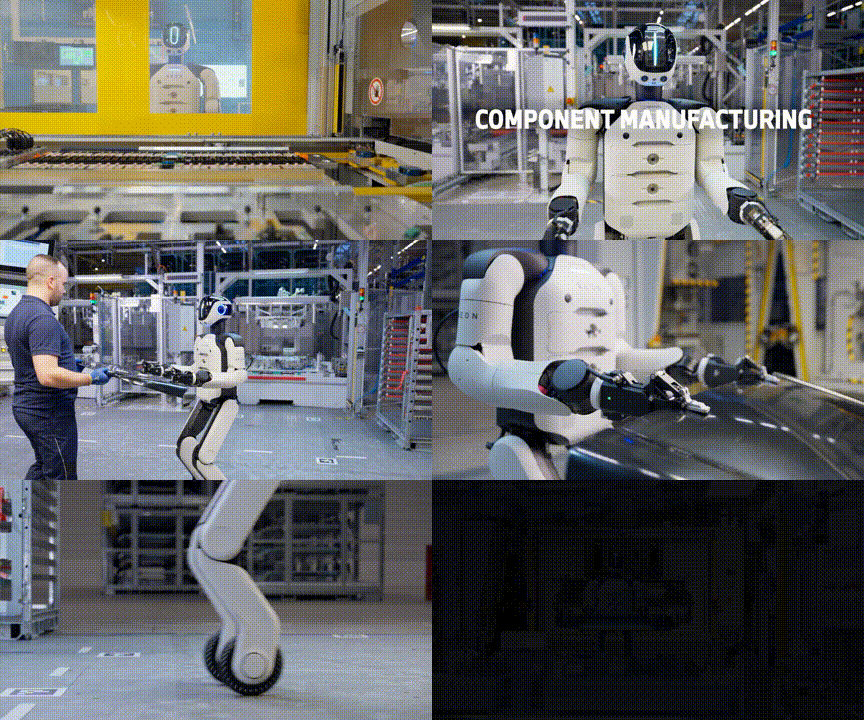
Throughout the validation, DH-Robotics’ electric grippers consistently supported critical operations such as tablet loading and unloading under prolonged, high-frequency production conditions. Their performance demonstrated the engineering reliability of end-effectors operating at real production-line takt time.
Looking ahead, capabilities of this kind will be fundamental to deploying Embodied AI in real-world manufacturing.
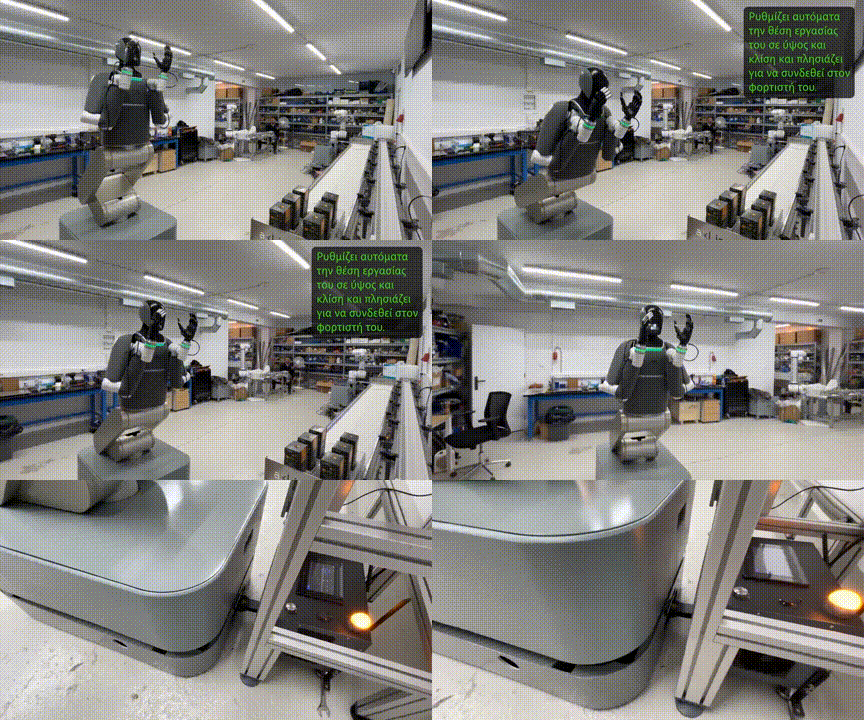
As humanoid robots move from the lab to the factory floor, successful deployment depends not only on AI algorithms and robot hardware, but also on the engineering maturity of the entire robotic system—including its end effectors. This marks a fundamental shift: dexterous manipulation is no longer simply a performance metric, but a prerequisite for deploying Embodied AI in real manufacturing environments.
Within this ecosystem, DH-Robotics provides the critical interface that translates embodied intelligence into real-world industrial execution.